North! or Be Eaten — My Son's Review
Here’s an added bonus for the Christian Science Fiction & Fantasy Blog Tour where we are covering the young-adult fantasy novel, North! or Be Eaten in The Wingfeather Saga by Andrew Peterson. The bonus? My son, Leighton who is 15, wrote his own review: NOTE: PLOT SPOILERS BELOW ! BEWARE !! ^ OR B E-10. LOL. Awesome book, I was often surprised when Andrew Peterson led up to a pretty cliche plot thing… only to do the exactly opposite of what I expected. Gammon for instance, he’s the Robin Hood type leader of a rebel group who live in the icy ice prairies of the north portion of Aerwiar. He is planning (as far as we know for most of the book) to betray the asylum seeking Igiby family. He goes so far as to have them bound and is about to deliver them to the new Gray Fangs of Dang, when he reveals that it was a spectacular ruse, and takes the evil Fangs by surprise and slays them in his own castle! And then… The High King of Annieria, a.k.a. Tink Igiby, is taken by the black carriage and changed by evil sorcery into a Gray Fang. Woe to his family! LOL. All I can say is: READ IT! 100,000 out of 10 stars! North! or Be Eaten — Where I Interview the Former Pirate, Podo Helmer
Welcome to our third day of the Christian Science Fiction & Fantasy Blog Tour review of the young-adult fantasy novel, North! or Be Eaten in The Wingfeather Saga by Andrew Peterson. Today I’m sitting down with the irascible Podo Helmer—grandfather of the Igiby children and former Pirate—to ask him a few questions. RT: First off, Podo, could you not scratch the polished wood floor with that … that horrendous looking peg-leg of yours? PODO: Slimy as the bottom of the Blapp! RT: Really, now, where have you been walking? Here’s a towel so you can clean up a bit. PODO: (wipes floor and peg leg). Aye. That’ll help, for a little while at least. RT: Hopefully longer than that, yuck! So now, I hear you and the Igibys have been doing a bit of sight seeing … any special place you all stopped by? PODO: Fingap Falls! RT: Wow, that must have been quite a visit! Kind of like Niagra, would you say? PODO: It’s not as bad as I thought. RT: Well, the travel brochures might need some work, I suppose. What with trolls and fangs and all! Hopefully they didn’t ruin your vacation, old chap. Tell me what you all did next—didn’t you have a nice walk along Glipwood forest, and that … err … rather nice river Blapp? PODO: By the light of the Hanger Moon. RT: Perhaps your dim conditions combined with your myopia caused you to get your peg leg … err … slimy. Did, mayhap, any daggerfish bite you? PODO: Hardly a scratch, ye big baby! RT: Really now! No need to call names, my dear man! But surely something injured you … I see your right shoulder’s all bandaged up. PODO: Arrows. RT: Oh my! You don’t say? Here, would you like me to pull that arrow out? That looks like it hurts. PODO: No need to do anythin’ drastic. RT: Well, you might say that, but what if it gets infected? We couldn’t have an old salt dog like you laid up while you have your family to care for. I really think I should take it out… PODO: Aye. Sounds like our best option. RT: (removing arrow while Podo yells) Pipe down, man! You’d think I was your tax-assessor! PODO: And you’re the first one I aim to lay my teeth and me bushy eyebrows on. RT: I’m not sure this interview is going as expected. If you don’t behave yourself, you’ll have to leave. Anyway, you’ve lost a lot of blood. PODO: Old Podo’s not got much left in ‘im. RT: Well, maybe a trip to the doctor can fix you up after our interview. So tell me, who shot you? PODO: Thieves and killers. RT: Right. Well now, how did you get away? PODO: The tree! RT: You must be very spry to be climbing trees at your age. How did you think of it? PODO: I’m old and one legged, but I’m no fool. RT: Well, don’t take offense—really, you can put your sword back. Podo, please, I didn’t mean to offend you. I guess this means our interview is at an end, eh? PODO: That’s right. RT: So, this is Robert Treskillard, signing off, hopefully not for the … gulp … last time. Podo, I hope you’ve … err … enjoyed our little interview? PODO: We’ve wasted precious time. RT: Right, well, you don’t have to jab me in the ribs so. Perhaps you might … no, no, not the plank! Anything but the plank! Please, there are sea-dragons down there. PLEASE!
p.s. Actually, I’m in the process of interviewing Andrew Peterson himself, and as soon as the interview is finished, I’ll post it here. So come back, probably next week, to see if I fare any better than with Podo Helmer. Hmmmmm… Also, to read my reviews of North! or Be Eathen, see Day One and Day Two. Footnote: Podo’s quotes come from North! or Be Eaten, page 105, 59, 47, 66, 103, 66, 59, 98, 75, 103, 55, 89, 89, 103, 106, and page 47. North! or Be Eaten — Review, Day Two
Today is our second day of the Christian Science Fiction & Fantasy Blog Tour review of the young-adult fantasy novel, North! or Be Eaten in The Wingfeather Saga by Andrew Peterson. Today I’m going to unfurl my wings and cover some things in depth. This also means:
The Author
But this doesn’t tell you all. He has recorded 12 albums, and is, as I write this, in the middle of writing and recording a new one. One album that stands out from the others (that is not mentioned above) is Behold The Lamb, a Christmas album of all new songs recorded with many other recording artist. ![]()
As well, Andrew is a man who is inspired to walk in the godly footsteps of C.S. Lewis. For instance, the popular website he began ("The Rabbit Room") is named after the room where Lewis and the Inkling’s met in Oxford, which Andrew visited on a trip to England. Based on these first novels, I would say that Andrew is well on his way to leaving us a rich legacy (similar to Lewis) of literature that will encourage generations of children to come. North! or Be Eaten — Review, Day One
This book is filled with the brightness of children’s dreams, and the blackness of their nightmares. Today marks the kick-off of the Christian Science Fiction & Fantasy Blog Tour reviewing the young adult fantasy novel, North! or Be Eaten, by Andrew Peterson. North! or Be Eaten is book two in The Wingfeather Saga, and what a book it is! I enjoyed book one, On the Edge of the Dark Sea of Darkness, immensely, but book two was even better. Filled with non-stop action, touching scenes, and the chilling evil of the world, North! or Be Eaten will leave you breathless, teary-eyed, and cheering all at once. The Plot
This book is an incredible journey, one not to be missed by young or old alike. And don’t judge North! or Be Eaten by its cover or title (even though the artwork is great), because you will soon realize that everything you believed about the book is false, and the real truth will shock you. Andrew Peterson spins a tale with beauty, tragedy, triumph, and deep mysteries, and the notions you think are true after reading book one will turn around and bite you in book two. The Characters
The Writing
Andrew weaves the tale so brilliantly that, as an adult, I often forgot it was a YA novel—the dark parts can be really dark, and Andrew doesn’t pull his punches. These Igiby’s get themselves into heaps and heaps of trouble, is all I can say, and Andrew knows how to move the action along, yet keep the themes prominent of family love, judgment for sin, and the need to fight against evil. And remember, there is ALWAYS A WAY OUT! The amazing thing about these novels is that even though there is a lot of fantasy spoof and good humor present, the writing is actually very serious. Recommendation
Great job, Andrew! I eagerly look forward to book three! Come back for Day 2, when I will talk about the author and give a peek at some of the scenes that touched me in North! or Be Eaten. ![]()
Announcing Epic Tales Press
Ah yes—you are expecting me to announce that I am self-publishing my book. Not so. ![]()
Now it is possible that I may decide to go the self-publishing route, but at this point I am not. Yes, my pursuit of an agent has failed so far, but that does not mean that I cannot find a publisher without an agent. In fact, full-throttle literary agent Nathan Bransford says just that:
When I first read the above quote, I realized how true it was. Trying to get a fantasy published with CBA publishers is really difficult for the following reasons:
This is not to say it is impossible … it is not. It is just very, very difficult. In my case, I am trying to figure out if I am being rejected because of my writing, or the fact that my novel is based on King Arthur. Clear feedback from agents is not forthcoming—and they don’t owe me an answer. Can my writing be improved? Sure. But this is where I agree with Chip MacGregor, who says “Every publisher is looking for a great idea, great writing, and a great platform.” The question is this: Is a novel based upon the legends of King Arthur considered a “great idea” by the Christian publishers? Is any major Christian publisher willing to try a new angle on King Arthur that still deals with the legends in a serious way? I’m not sure, and that’s the rub. In fact, from my pressing hands with editors at the 2008 ACFW conference, I would say, no. They are looking for totally new ideas … something that has never been done before. This is not to say that my angle on King Arthur has been done before … it hasn’t. I have a fresh take on these legends with what I consider an up to date writing style that focuses on suspense. You could almost call my novel a fantasy thriller. But it is still based on King Arthur, which the publishers consider “done before". Ignoring the fact that I’m biased, Why? People always say “that’s been done before"—and it has—but the fact remains that novels based on the legends of King Arthur sell. They sell because people are fascinated by these legends, and their appetites show no sign of abating any time soon. To me … the fact that my novel is based on King Arthur is what gives me “platform” … a certain number of guaranteed sales to help the publisher earn back their investment. For crying out loud, Arthurian novels have their own sub-category at Barnes & Noble’s website! In fact, one in every 30 books of current published secular fantasy falls under the Arthurian sub-genre. This amounts to over 220 books currently in print! Not only that, but according to Wikipedia, the last 100 years have seen 37 movies produced that attempt to stay somewhat close to the legends of King Arthur. Of these, half were made since 1980, and eight in the last ten years alone. If anything, the interest has increased, not lessened. (And this list does not count movies that revise the Arthurian legend in a major way. If these were included, then the number grows to nearly 70 films.) The public is fascinated with King Arthur, and spend their money accordingly. If they didn’t, these films and novels would not exist. But, barring my writing (which I think is either there or nearly there), I’m just not sure the major Christian publishers want another King Arthur series—or at least the agents might think so. The only example of a serious treatment of King Arthur in the CBA was by Stephen Lawhead, and his series is STILL in print after twenty years. It is still selling! Hmmmm … anyway, I’ll get off my warhorse here and sheathe Excalibur. To recap, I have a few agents left to hear from, and meanwhile I will begin the long process of sending queries and proposals to medium and small publishers. Thanks for listening, and keep your eyes peeled for a make-over on our main page at www.EpicTales.org to reflect its new name: Epic Tales Press! [ADDENDUM NOTE: we’re not taking submissions … this is primarily for our personally recorded Wren Song CDs.] GREEN by Ted Dekker — A Review
Green, book zero of the Circle, is a provocative novel. Who ever heard of a book ZERO? A novel that is both the beginning and the end of a series? I’ve only read Ted’s young-adult fiction, so I wasn’t quite sure what to expect, but I was in for a thrilling ride! One side-note to my review is that I read GREEN while I was very sick with influenza, and so to read about Raison-Strain-B and the sickness of the Horde was very appropriate. I could relate! (Oh, if you haven’t read it yet, you can read a sample chapter here.) Premise
That’s a small part of the introduction given at the beginning of the book, and I must say, it is a complicated plot, and coming in at the end of the series, I had a lot of catch-up to do. Ted made this relatively easy with a lot of clear explanations, but it was still hard to follow at times. (NOTE: Plot SPOLIERS below) The basics of the plot is that it is a love story … of God for his children, of Thomas Hunter for his son who has rebelled against him, of Chelise for her father and mother who lead the Horde, of Billy and Janae for the darkness that calls them. It is also a story of the doubting of that love, and the climactic, apocalyptic battle that comes because of that doubt. Plot & Characterization
I really liked this, but was not sure I believed Samuel’s reaction to the situation. I understand its necessity to the plot, but it bumped me out of the book a bit. Another minor gripe was that Chelise travels across the desert no less than four times. This could have been simplified greatly, giving more time for meaningful action and dialogue from her. For Billy and Janae—I didn’t mind reading about them at the beginning, but later it became too dark for me. Thoughts On The Spiritual![]()
Samuel’s journey, in some ways, reminded me of Saint Julian (by Walter Wangerin, Jr.), so if you’ve read that book, I’d be interested in your thoughts in comparison to the journey of Samuel in GREEN. One thing that concerned me is the small inference at the end that God is not in control, that somehow our free will can supersede His plan for mankind. But this is a theological debate far larger than this tiny post, and I don’t think Ted’s position here detracts seriously from the book in any way. Another issue that I thought strange was the idea that demons (shataiki in the book) begin life microscopically as eggs in a host’s skin. This started to sound like “Star Wars” where the Force ended up being from a microscopic creature. Still, this is FICTION, folks, and Ted was having some fun creating a fictional world. Also, I could never quite pronounce Shataiki smoothly. Maybe it was my fever, but I kept picturing flying shitake mushrooms … very odd for demonic beings! A Minor Nit
I understand that Ted has to make sure people understand, since they may be using this book as the jumping off point into the series—but how many times (for instance) do I need to be told the mating habits of Shataiki? I lost count, but I think it was given three times when one would have sufficed. Beginning and The End?
The book went merrily to the climax until the very last second, and then, through a plot device, rolled it back around to the beginning. At that point, I could see some other groundwork Ted had laid for this, but it wasn’t quite what I was expecting. The dependence on time travel in the hands of God and Satan was the only thing that allowed this to happen … but then again, interwoven time seems to be a foundation for the entire series, so I shouldn’t have been surprised. Recommendation
Looking back on my experience reading Green as the first novel in the series, I wish I had started with Black instead. I think it all would have made more sense and I would have enjoyed it more. Still … my hat is off to Ted for coming up with a creative way to get readers to pick up his series fresh! NOTE: I received GREEN free from Thomas Nelson’s Book Review Bloggers program in exchange for an honest review. "God, you are awesome!"
That’s a quote from Leighton (my son, age 15) in his new blog post entitled Try To Count To Infinity…. Check out his thoughts about God, the world, and eternity! Top 12 Blog Posts of 2009
Here are “The Top 12 Posts of 2009″, in ascending order, ahem! The numbers in parentheses tell how many people read the post, but see my note below on this.
A few observations about this: I’m getting more readers coming to my blog, and this is great news! Last year’s “least read” top post had 111 readers. This year’s had 236 – over double! And there were just a SLEW of blog posts around 200 that didn’t make the list. This increase is despite the fact that I wrote 32 less blog posts than last year. I did, however, make up for this by my involvement in FaceBook, and that gets some of the credit for people coming to my blog. The other thing that helps bring people to my blog is that Google likes me! If you search for “King Arthur Blog” (and ignore all baking related sites), then I come up at #9. Book reviews are popular! Last year I had 3 book reviews in the top 12 – this year I have 5. Michael Hyatt has a lot of followers! My MOST READ BLOG POST of 2009 was written late in the year (October), yet shot to the top in no time because Michael twitterred a link to my post. Not only that, but it has now broken into the TOP 15 blog posts of ALL TIME. Wow, Michael! Over 704 people read the first chapter of MERLIN’s BLADE in 2009, almost twice the number who had read it through 2008. A lot of my time this year went to perfecting MERLIN’s BLADE, so this is encouraging. Two of the items on the list are “off topic” for me (on topic being The Craft Of Writing, King Arthur, and Faith) … #2 (a local regional event that a lot of people wanted information on), and #11 (about a lingual nerve injury I sustained while having dental work done, yes this one “hit a nerve” with the public If these two were removed from the list, the following two would be added. A big thank you to all my loyal blog readers! Lets have a great 2010! (*) The number of people that have read a post is “rough” because of the vagueness of internet hits. Which blog post do you count when you just come to the main page and five posts are shown? I think this number only gets added to when someone reads only one specific blog post, and not just to a page. A Pictish Ballad
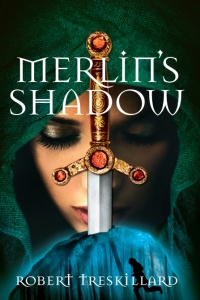
![]() I had to write a ballad in Pictish for my current work in progress, Merlin’s Shadow. The problem is that we don’t know what language, exactly, the Picts spoke. Many scholars think it was related to Gaelic, while my daughter, Adele, is of the persuasion they spoke a Germanic language older than English, and this became the lowland Scots of today. The real difficulty is that my book is in English, and I need to portray three languages:
To do this, I am going to write (2) as if it were Scottish, and (3) as if it were a “gaelicized” form of English. Gaelicized English? By this I mean I am changing the spelling of the English words based on some VERY simple rules of Gaelic (with the help of my daughter and a lot of her books), as well as replacing a few words here and there. My goal is to make the speech sound and look strange, while still making it readable by an English reader. Anyway, see if you can figure out the meaning of the following short ballad. (Note: If you know Gaelic, use English pronunciations for best results.) Over an land, from mount and glen Chame we peiple, across am fen. Where is an king, O where is he? Tha’ fhights for you, tha’ fhights for me? Chame we to Tull, to Twylloch-Scwane To shee his light, our fleish and bain! To mhake a king, a king to thrain To shwear our aith, air hill and plain. Upon am mound, upon an stone Bhled he his blood, our hiearts to own Crithan-Tuath! Crithanas-Mor! Mhade we a pact, in diays of yhore. Member’ive, sons! Member’ive, men: Yiur king, yiur oath! Yiur fealty ken! Take’ive yiur shpears! Take’ive yiur bhows! And come’ive now, to Duntarv Rhows! ![]() How To "Write in the Shadows" by John Olson
We’ve all heard of “reading between the lines"… well how do you “write between the lines” to evoke emotional responses from readers on the sly? Well, I just read some of the most fantastic writing advice in Randy Ingermanson’s monthly e-zine that explains just how to do this. He interviews John Olson about “Writing In The Shadows", which is something I do, but had never heard it explained this way. Thankfully, Randy lets people re-publish articles from his e-zine as long as you include the following two paragraphs:
So, on to this EXCELLENT Advice: Creating: Writing in the Shadows
I soon learned that John had a yen to write novels based on the vampire mythos and an uncommon ability to write spooky stuff. John soon learned that I like scary fiction. That weekend, we forged a friendship that’s lasted for over thirteen years. We’ve coauthored two books together. We’ve climbed corporate ladders and abandoned them. We’ve held each accountable as we pursued our dreams. I’ve learned boatloads about the art of writing fiction from John, and also a bunch about the art of living, and I hope I’ve paid him back by teaching him a thing or two also. A bit more than a year ago, I sat in on a major track John taught at a writing conference on the subject, “Writing in the Shadows.” I enjoyed his talk tremendously and kept thinking, “Darn! Why didn’t I think of that?” John’s latest novel, POWERS, is just now hitting the bookshelves. I got my copy last week and am reading it now. It’s a prime example of “writing in the shadows.” I’ve asked John for an interview so I could introduce you to his ideas. Here’s the result: RI: I really enjoyed your lecture series last year on “Writing in the Shadows.” In a nutshell, what is “writing in the shadows” and why would an author want JO: You’ve heard of reading between the lines, right? Well, writing in the shadows is writing between the lines. It’s a set of techniques for creating mood and evoking an emotional response in such a way that readers aren’t consciously aware of why they are responding the way they do. The words on your page all have shadows. Once you learn how to harness these shadows for your own purposes, you can use these techniques to add creepiness to dark scenes, dread to action scenes, joy to celebration scenes or chemistry to relational scenes. RI: Editor often tell us to “show, don’t tell,” but they rarely show us what they mean by that. What does “show, don’t tell” mean to you? JO: It’s pretty easy. It means to… uh, show and er… not tell. Okay, maybe it isn’t so easy to explain. Let me give you some examples. As a novelist I’m often tempted to write something telling such as:
But if I do this, I don’t give the reader a chance to experience that fear emotionally along with Hailey. Readers know intellectually Hailey is afraid, because I told them she was (and foolish readers that they are, they trust me), but they don’t get to experience the fear along with her unless I actually show Hailey being afraid:
See? I never once told you Hailey was afraid, but you probably figured it out anyway. That’s showing. Okay… I know what you’re thinking. I totally cheated. Of course Hailey’s going to be scared with the sharp end of a vampire pointed at her neck. But what if your story doesn’t have any conveniently located vampires? What if you need to show fear, and the reader doesn’t even have a reason to be afraid yet? That’s where writing in the shadows comes in. It’s possible to write a scene in such a way that your readers will pick up on the fear without knowing the reasons behind it. Your POV character doesn’t even have to realize she’s afraid. In fact it’s often better if she doesn’t. If she knew she should be afraid, she might not walk into that dark basement we need her to walk into. We see this technique used all the time in movies. Our clueless heroine walks into the dark basement and suddenly the background music changes. We know right away what’s going to happen, and we start yelling at her, telling her to turn her flashlight on, but she doesn’t seem to hear us. It can’t be because the background music is too loud, because if she could hear the music, she’d know the vampire was hiding behind the artificial Christmas tree waiting to jump out at her and make us wet our pants. Stupid heroines. If only our novels had soundtracks to go along with them, showing in the shadows would be so easy! But if you think about it, our novels do have background music. It’s hidden in the shadows of the words. Sentences have flow and rhythm and cadence. Words have connotations that evoke mood and emotion and tone. Characters have autonomic responses that happen whether they’re aware of them or not. We have all kinds of tools to work with. We can go beyond showing and show in the shadows like this:
See? Words like “sigh” and “aftertaste of decay and wet rat” and “sealing her in” create an emotional subtext that shows the reader what to feel without telling them why we want them to feel it. That’s showing in the shadows. RI: You’re a strong proponent of giving readers “partial information.” What do you mean by that, and what have you got against giving readers the full scoop on things? JO: Giving the full scoop ruins all the fun – at least it does if we’re talking about novels. Ice cream is a completely different subject. Imagine a murder mystery where the author tells us who the murderer is the second we’re introduced to him. Or imagine a romance where the author tells us all about the couple’s future life together as soon as the male lead is introduced. It kind of spoils the fun, doesn’t it? Well, that’s what we do any time we give the reader too much information. We take away the mystery and anticipation. So if Dash Totallyripped McMoneybags throws up the second he sees our heroine, don’t tell us why. Let it be a mystery we can look forward to solving. And if Sydney Hottiepants is in love with Dash, don’t ruin the romance by telling us. Let us interpret what she’s feeling by the way she agonizes over her decision of which flavor of lip gloss to wear. Remember, when we meet people in real life, they don’t come with fact sheets pinned to their shirts. We have to “figure them out” by interpreting their words and actions. Let’s face it. We humans are really good at interpreting things. It’s one of the things we do best. By giving our readers too much information, we deny our readers the pleasure of interpreting and figuring things out for themselves. Not only does it take away from the fun, but it feels shallow and contrived. Why? Because that’s not how reality works. We may think that giving ten pages of backstory on the history of Sydney’s attraction to losers is going to make her seem more real, but it will actually have the opposite effect. In reality we never have access to all the information. We have to interpret the clues we’re given and figure things out for ourselves. It’s more fun that way – even if we get everything wrong. PS: John Olson has a new audio course, “Writing in the Shadows,” which will go on sale on [Randy’s] Web site soon. Before that, though, we’ll give you a chance to get it free – if you buy John’s latest book POWERS, which happens to highlight all of John’s ideas for writing in those pesky shadows. During the course of the next week or so, [Randy will] be doing a book rush for:
Note from Robert: Randy JUST OPENED UP the promotion for John’s book … get it by clicking here! :: Next Page >> |
Welcome to EpicTales.org!
Merlin's Blade (10th Draft Edit)
| 25% |
Most Popular Posts
- Pendragon — Sword Of His Father (1602)
- New Excalibur Design! (1352)
- White Stag Spotted In Scotland (1291)
- Free "Design Your Own" 3D Dragon (1275)
- My 1st CHAPTER For You To Review (1156)
- Welcome To My Blog! (963)
- Auralia's Colors - A Full Review (938)
- Thirsting For The Water Of Life — Part 1 (645)
- Stephen Lawhead Interview About Magic In Fiction (640)
- King Arthur Is Real But Winston Churchill Is Made Up? (632)
- King Arthur - My Odds Just Got Worse!! (608)
- King Arthur Website Design In The Works (604)
- Scarlet By Stephen Lawhead — Part 2 (574)
- I'm In "Pendragon—Sword Of His Father" !! (563)
- Taste And See That The Lord Is Good (545)
Categories
- All
- Activities (31)
- Archaeology (3)
- Blog Reading (58)
- Books & Authors (63)
- Adele Treskillard (3)
- Andrew Peterson (7)
- Austin Boyd (1)
- Bryan Davis (1)
- C.S. Lewis (4)
- Chris Walley (2)
- Christopher Hopper (3)
- Donald Maass (1)
- Donita K. Paul (5)
- Douglas Bond (1)
- Eric Wilson (1)
- Frank Peretti (2)
- J.K. Rowling (1)
- J.R.R. Tolkein (3)
- James Scott Bell (1)
- Jeffrey Overstreet (6)
- John Olson (3)
- John Steinbeck (1)
- Jonathan Rogers (4)
- L.B. Graham (5)
- Lisa T. Bergren (2)
- Orson Scott Card (1)
- Philip Pullman (1)
- Philip Reeve (1)
- Randy Ingermanson (1)
- S.D. Smith (1)
- Scott Appleton (1)
- Stephen Lawhead (16)
- T.H. White (1)
- T.L. Hines (1)
- Ted Dekker (5)
- Tom Pawlik (2)
- W.B. Yeats (1)
- Wayne Thomas Batson (5)
- Christianity (52)
- Family (32)
- Festivals (4)
- Holidays / Holy Days (6)
- House Maintenance (7)
- Movies (13)
- Music (10)
- On The Web (28)
- Poetry (7)
- Politics (5)
- Sports (0)
- Television (4)
- Travel (3)
- Announcements (32)
- Fiction Tours (37)
- On Writing Fiction (86)
- Agents (10)
- Donald Maass (1)
- Kevin Kaiser (1)
- Nathan Bransford (3)
- Steve Laube (3)
- Terry Burns (1)
- Editing Fiction (23)
- Marketing Ideas (15)
- Publishers (6)
- Epic Tales Press (1)
- Flaming Pen Press (1)
- Marcher Lord Press (2)
- Thomas Nelson (10)
- THIRST™ Methodology (10)
- Writing Conferences (6)
- Agents (10)
- Research For The Series (26)
- King Arthur Related (32)
- Merlin Related (9)
- On Celtic History (24)
- On Cornwall (10)
- On England (10)
- On Ireland (2)
- On Scotland (8)
- On Wales (15)
- The Merlin Spiral & The Pendragon Spiral (53)
- 1: Merlin's Blade (51)
- 2: Merlin's Shadow (15)
- 3: Merlin's Nightmare (5)
- 4: Arthur's Peril (5)
- 5: Pendragon's Blood (3)
- 6: Morgana's Hour (2)
- FAN ART! (2)
- My Book Excerpts (8)
- Progress Reports (25)
Archives
- January 2010 (8)
- December 2009 (2)
- November 2009 (5)
- October 2009 (6)
- September 2009 (4)
- August 2009 (5)
- July 2009 (8)
- June 2009 (9)
- May 2009 (6)
- April 2009 (5)
- March 2009 (2)
- February 2009 (11)
- More...
| Sun | Mon | Tue | Wed | Thu | Fri | Sat |
|---|---|---|---|---|---|---|
| << < | > >> | |||||
| 1 | 2 | 3 | 4 | 5 | 6 | |
| 7 | 8 | 9 | 10 | 11 | 12 | 13 |
| 14 | 15 | 16 | 17 | 18 | 19 | 20 |
| 21 | 22 | 23 | 24 | 25 | 26 | 27 |
| 28 | ||||||
Links
Fiction Writing Blogs I Read
- ** CSFF Blog Tour **
Brandon Barr
Keanan Brand
Rachel Briard
Melissa Carswell
Valerie Comer
Amy Cruson
CSFF Blog Tour
Stacey Dale
D. G. D. Davidson
Shane Deal
Jeff Draper
April Erwin
Karina Fabian
Andrea Graham
Todd Michael Greene
Katie Hart
Timothy Hicks
Jason Isbell
Jason Joyner
Kait
Carol Keen
Magma
Rebecca LuElla Miller
Eve Nielsen
Nissa
Wade Ogletree
John W. Otte
John Ottinger
Steve Rice
Crista Richey
Alice M. Roelke
Chawna Schroeder
James Somers
Rachel Starr Thomson
Robert Treskillard
Steve Trower
Speculative Faith
Fred Warren
Jill Williamson - Alexander Field
- Brandon Barr
- Chip MacGregor
- Jacob Parker - The Yodeling Dwarf
- Jason Joyner
- Michael Hyatt
- Randy Ingermanson
- Rebecca Luella Miller
- Stephen Lawhead
- Steve Laube
- T.L. Hines
- The Lost Genre Guild Blog
- Timothy Fish
- Wayne Thomas Batson
Blogs Of Friends
Blogging
- Find Me On Facebook
- Follow My Blog On Facebook
- High Calling Blogs
- My Technorati Profile
- Thomas Nelson Book Review Bloggers
My Favorite Posts
- God's Love In The Midst Of Our Pain
- King Arthur's Prophecy
- Making Fiction Seem Old
- My First Chapter For You To Review
- New Excalibur Design! (Graphic)
- Tolkien, Yeats and the Irish Wilderness
Sign Up For Our E-Mail List
Sponsors
Search My Blog
Arthurian & Historical
Awards
- CSFF Co-Top Blogger, May 2009
May 2009 - CSFF Top Blogger, February 2009
Feb 2009
Other Views Of My Blog
- Mobile Version
XML Feeds
Who's Online?
- Guest Users: 7